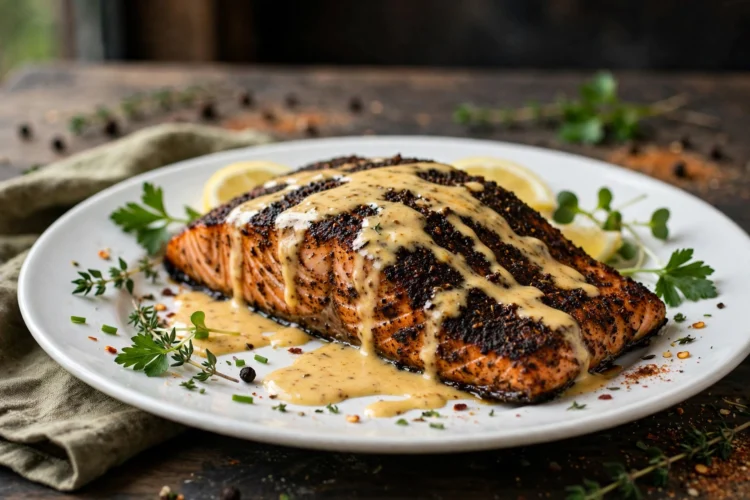
I’ll be honest with you: the first time I tried to recreate that famous restaurant Cajun salmon at home, it was a disaster. The spice mix burned before the fish cooked through, the sauce was thin and sad, and my kitchen smelled like regret for about two days. But here’s the thing — once you understand the two secrets behind the dish, it becomes one of the easiest, most impressive dinners you can pull off. And I mean really impressive.
The viral part isn’t an accident. Social media fell hard for this dish because it hits every single note a recipe needs to blow up: it looks stunning (that deep, charred Cajun crust against a pale, creamy sauce is pure camera gold), it sounds fancy without being fussy, and the flavor payoff is enormous for the effort involved. We’re talking one skillet, about 25 minutes, and a crust that crackles under your fork before you hit the silky, buttery center.
The real-deal restaurant version layers blackened salmon over a creamy Cajun butter sauce, and my copycat version nails that contrast. The salmon gets a bold, smoky crust from a homemade Cajun blend — no store-bought packet needed, and honestly, the homemade version tastes ten times better. Then it all gets finished with a quick pan sauce made from the salmon’s own drippings, garlic, cream, and Parmesan. Every bite is spicy, savory, rich, and just a little tangy from the lemon at the end. I’ve made this for dinner guests three times now, and every single time someone has asked for the recipe. So here it is — no gatekeeping.
Why you’ll love it
- Restaurant quality, home-kitchen effort. Twenty-five minutes, one skillet, zero special equipment. If you can sear a piece of fish, you can make this.
- That crust. The Cajun spice blend caramelizes into a smoky, slightly crisp coating that contrasts beautifully with the tender fish underneath.
- The sauce is the showstopper. A two-minute pan sauce of garlic, cream, and Parmesan that tastes like it simmered all afternoon.
- Weeknight-fast, date-night fancy. This is the rare dish that works for a Tuesday and a birthday dinner equally well.
- Totally customizable. Dial the heat up or down, swap the fish, or serve it over pasta, rice, or mashed potatoes.
- Protein-packed. Each fillet delivers serious protein, so it keeps you full without feeling heavy.
Ingredients
For the salmon:
- 4 salmon fillets (about 6 oz each), skin-on if you can get it
- 2 tablespoons olive oil
- 1 tablespoon melted butter (for the pan, trust me on this)
For the homemade Cajun seasoning:
- 2 teaspoons smoked paprika
- 1 teaspoon garlic powder
- 1 teaspoon onion powder
- 1 teaspoon dried thyme
- 1 teaspoon dried oregano
- 1/2 teaspoon cayenne pepper (use 1 teaspoon if you like real heat)
- 1 teaspoon kosher salt
- 1/2 teaspoon freshly cracked black pepper
For the creamy Cajun butter sauce:
- 3 tablespoons unsalted butter
- 4 cloves garlic, minced
- 1 1/2 cups heavy cream
- 1/2 cup freshly grated Parmesan cheese
- 1 tablespoon fresh lemon juice (about half a lemon)
- 1 teaspoon of the Cajun seasoning (a pinch from what you made above)
- 2 tablespoons chopped fresh parsley, plus more for serving
To serve:
- Lemon wedges
- Cooked rice, mashed potatoes, or buttered pasta (optional but encouraged)
Instructions
Step 1 — Dry the salmon like you mean it. Take the fillets out of the fridge about 15 minutes before cooking so they lose their chill. Then — and this is non-negotiable — pat them completely dry with paper towels, top, bottom, and sides. Moisture is the enemy of a good sear. A wet fillet steams; a dry fillet crusts. I press the towels on firmly and flip the pieces over to get both sides bone-dry.
Step 2 — Mix your Cajun seasoning. In a small bowl, stir together the smoked paprika, garlic powder, onion powder, thyme, oregano, cayenne, salt, and black pepper. Give it a good mix and take a pinch to taste — it should be smoky, savory, and just hot enough to make you notice. Set aside one teaspoon of this blend for the sauce later.
Step 3 — Season the salmon generously. Rub the olive oil all over the fillets, then coat every surface with the Cajun seasoning — top, sides, everything. Don’t be shy here. You want a visible, even layer of spice, roughly a teaspoon and a half per fillet. Press it on with your fingers so it adheres. This thick coating is what becomes that gorgeous blackened crust.
Step 4 — Get your skillet properly hot. Place a large skillet (cast iron is ideal, but a heavy stainless pan works too) over medium-high heat for a full two to three minutes. Add the tablespoon of melted butter and swirl it around. When the butter foams and just starts to brown, you’re ready. The pan should be hot enough that the fish sizzles loudly the second it touches down — that’s the sound of the crust forming.
Step 5 — Sear the salmon. Lay the fillets in the pan skin-side down (if skinless, presentation side down), pressing gently for the first ten seconds so the whole surface makes contact. Now here’s the hard part: leave them alone. Don’t poke them, don’t slide them around. Let them sear undisturbed for 4 to 5 minutes. You’ll see the color change creeping up the sides of the fish — when it’s about a third of the way up, it’s time to flip.
Step 6 — Flip and finish. Turn the fillets over carefully with a fish spatula. Cook another 3 to 4 minutes on the second side, until the fish is opaque and flakes gently with a fork. If you have an instant-read thermometer, aim for 125–130°F (52–54°C) in the thickest part for a moist, slightly rosy center, or 135°F (57°C) if you prefer it fully cooked through. Transfer the salmon to a warm plate and tent loosely with foil. Don’t wipe out the pan — those browned bits are flavor gold.
Step 7 — Start the sauce. Reduce the heat to medium. In that same skillet, add the 3 tablespoons of butter. Once melted, stir in the minced garlic and cook for about 30 seconds, until fragrant but not browned. You’ll smell that nutty garlic perfume immediately.
Step 8 — Build the cream sauce. Pour in the heavy cream and add the reserved teaspoon of Cajun seasoning. Let it come to a gentle simmer — small bubbles around the edges, not a rolling boil — and cook for 2 to 3 minutes, stirring occasionally, until it thickens just enough to coat the back of a spoon. Sprinkle in the Parmesan a handful at a time, stirring until each addition melts before adding more. Finish with the lemon juice and the chopped parsley. Taste it. It should be creamy, garlicky, lightly spicy, and bright. Adjust the salt and lemon until it sings.
Step 9 — Plate and serve. Spoon a generous pool of the sauce onto each plate (or serve family-style over your rice or pasta), set a salmon fillet on top, and spoon a little extra sauce right over the fish. Scatter with more parsley, add a lemon wedge, and serve immediately. That contrast — dark spicy crust, pale silky sauce — is what makes this dish.
Pro tips
- Don’t crowd the pan. If your skillet can’t comfortably fit all four fillets with space between them, sear in two batches. Crowding drops the temperature and steams the fish instead of crusting it.
- Skin-on is the move. The skin protects the fish, adds a crispy texture if you get it hot enough, and most of the fat renders away. If you buy skinless, it’s still delicious — just handle it gently when flipping.
- Make your own seasoning. Pre-mixed Cajun blends vary wildly in salt and heat, and many are loaded with filler. The homemade blend takes two minutes and lets you control everything.
- Temperature is everything. Salmon goes from perfect to chalky in about ninety seconds. When in doubt, pull it early — carryover heat will finish the job while it rests.
- Deglaze like a chef. If the fond (those browned bits) is sticking hard to the pan, splash a tablespoon of the cream in first and scrape with a wooden spoon before adding the rest. Every bit of that is concentrated flavor.
- Sauce consistency. If your sauce gets too thick, thin it with a splash of warm cream. If it’s too thin, let it simmer another minute or two — it thickens as the Parmesan melts and the water evaporates.
Variations
- Cajun shrimp. Swap the salmon for a pound of large shrimp and sear them just 90 seconds per side. Same seasoning, same sauce, half the cook time.
- Cajun chicken. Boneless chicken breasts (pounded to even thickness) take about 6 minutes per side. Same crust, same sauce — a great option for non-fish eaters.
- Pasta night. Toss the sauce with a pound of cooked fettuccine and flaked salmon. This turns it into the full restaurant-style pasta dish.
- Dairy-free. Use olive oil instead of butter and swap the heavy cream for full-fat coconut milk or cashew cream. The sauce is a little lighter but still luxurious.
- Heat levels. Cut the cayenne in half for a mild version, or add a pinch of crushed red pepper flakes to the sauce for extra fire.
- Herb swap. No parsley? Fresh chives or a little cilantro work beautifully in the sauce.
Storage & reheating
Leftovers keep well in an airtight container in the fridge for up to 3 days. To reheat, warm the salmon gently in a covered skillet over low heat with a splash of cream or a little of the leftover sauce — about 5 minutes should do it. The microwave works in a pinch (50% power, 90-second bursts), but the crust won’t be quite as crisp. I don’t recommend freezing this one; cream sauces can split when thawed, and the salmon’s texture suffers. If you must freeze, freeze the seasoned raw salmon separately and make the sauce fresh.
FAQs
What does “blackened” actually mean? It’s a Cajun cooking technique where fish or meat is coated in spices and seared in a very hot skillet, so the spices char and darken into a flavorful crust. It’s not burned — it’s caramelized spice. The trick is high heat and not moving the fish around.
Can I use frozen salmon? Absolutely, but thaw it completely first — overnight in the fridge is best. And be extra thorough with the paper towels, because thawed salmon releases more moisture, which works against that crust.
How do I know when the salmon is done? The most reliable way is an instant-read thermometer: 125–130°F for medium, 135°F for medium-well. Visually, the fish should be opaque on the outside and just barely translucent in the very center when you peek with a fork. It’ll finish cooking as it rests.
Can I make the sauce ahead of time? You can make it up to a day ahead and refrigerate it. Reheat gently over low heat, whisking, and add a splash of cream if it’s too thick. But honestly, the sauce takes five minutes — I usually make it fresh while the salmon rests.
What should I serve with it? The classics are buttered rice, garlic mashed potatoes, or fettuccine to soak up that sauce. For vegetables, roasted asparagus or a simple green salad balances the richness perfectly.
This is one of those recipes that’ll make you feel like you unlocked a cheat code. Make it once, and I promise it’ll earn a permanent spot in your rotation.
🍳 Love this recipe? Get 1,800 more in The Complete Recipe Library